
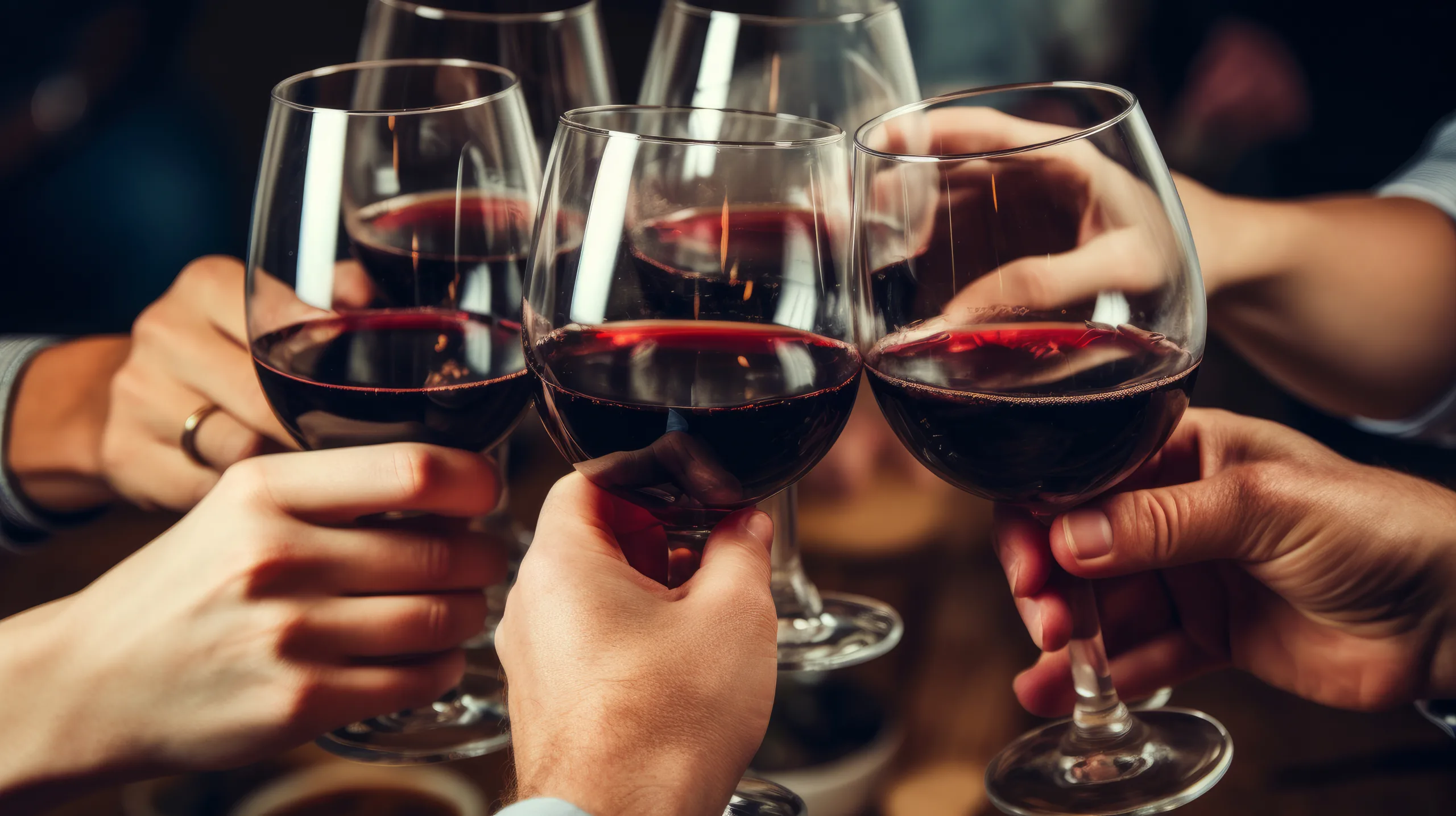
Join us for a delightful tasting of exciting wines selected by a wine specialist. A minimum of five different wines will be served.
Wine tasting is an art form that combines sensory enjoyment with in-depth knowledge of the wine’s origin, production, and characteristics. To get the full experience, it’s important to understand the different elements involved in a wine tasting.
Preparation
Begin by choosing a calm and well-lit environment free from distracting odors. Use clean, clear wine glasses with a tulip-shaped bowl to help concentrate the aromas. Serve the wine at the recommended temperatures:
- White wine: 8–12°C
- Red wine: 14–18°C
- Rosé wine: 10–12°C
- Sparkling wine: 6–10°C
Steps in Wine Tasting
- Appearance: Hold the glass against a white background and observe the color and clarity. The color can indicate the wine’s age and grape variety.
- Aroma: Gently swirl the wine in the glass to release its aromas. Inhale deeply and try to identify primary (fruity, floral), secondary (fermentation, dairy), and tertiary (aging, spice) scents.
- Taste: Take a small sip and let the wine coat your entire palate. Note the flavor profile, including sweetness, acidity, tannins, and alcohol content. Also consider the body (light, medium, full) and texture.
- Finish: After swallowing, evaluate how long the flavor lingers. A long finish can be a sign of high-quality wine.
Additional Knowledge
- Terroir: This term refers to the unique interplay between soil, climate, and human influence that shapes a wine’s character.
- Grape Varieties: Knowing different grapes like Cabernet Sauvignon, Chardonnay, and Pinot Noir can enhance your understanding of wine profiles.
- Wine Production: Understanding the winemaking process—fermentation, aging, and maturation—can offer insight into why a wine tastes the way it does.